... Capitolo 3 ... Verso il benessere/Towards welfare
Aggiornamento: 1 ott
English traslate: TOWARDS WELFARE

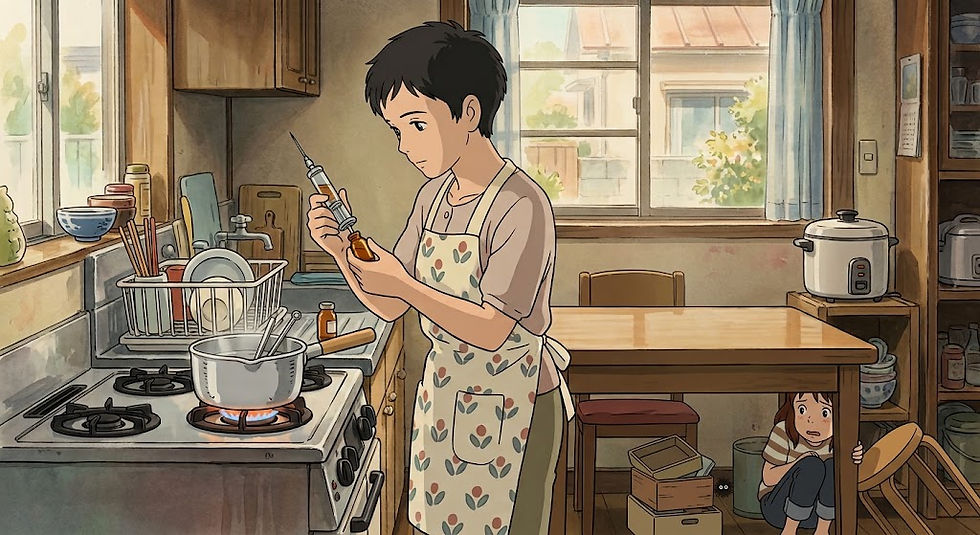
C’è un’età precisa in cui il corpo smette di essere semplicemente un veicolo per correre a perdifiato e diventa un enigma, un peso o — peggio ancora — l’oggetto di discussione preferito dagli adulti.
Per me quel momento è arrivato quando la porta del bagno si è chiusa. Improvvisamente io e mio fratello non potevamo più fare il bagno insieme nella vasca: lui stava crescendo, e l'innocenza dell'infanzia si era bruscamente interrotta, lasciandomi sola a fare i conti con riflessioni decisamente troppo grandi per me. Fissando l'acqua calda, mi perdevo in veri e propri labirinti metafisici: “Chi sono io veramente? E se un giorno mi svegliassi in un corpo diverso? La mia anima sarebbe la stessa?”. La mia identità di bambina mi era chiarissima, ma la materia in sé — questo involucro di carne e ossa — mi sembrava una barriera misteriosa e ingombrante.
Ad appesantire la mia mente non c'erano solo le mie domande, ma anche i giudizi spietati del mondo esterno.
Il tribunale delle zie
Quando le zie salivano a casa nostra per il saluto rituale, il mio corpo diventava una piazza pubblica. Un giorno ero troppo magra, la settimana dopo ero ingrassata. Un’altra zia mi voleva tagliare i capelli, mentre un'altra la bloccava: «Assolutamente no! È una ballerina, i capelli servono lunghi per lo chignon. Piuttosto, non dimagrire oltre!». E immancabile arrivava il paragone: «Certo che mi assomiglia… anche se io, alla sua età, avevo le gambe decisamente più belle».
Parlavano davanti a me come se fossi un soprammobile inanimato. E poi, abbassando la voce, la classica domanda sospirata a mia madre: «Ma sviene ancora la bambina?».
La tortura medica (e la siringa di vetro)
La risposta a quei svenimenti era l’anemia. E negli anni Settanta le cure per l'anemia significavano una cosa sola: le vitamine. O meglio, la ricostituente intramuscolare.
Per me la sentenza scattava in cucina. Quando sentivo il rumore metallico del pentolino messo sul fuoco per far bollire e sterilizzare la siringa di vetro e il temibile ago d'acciaio, andavo completamente nel panico. Cominciavo a correre disperatamente per tutta casa, cercando una via di fuga impossibile da quel supplizio. Nessuno si prendeva il tempo di spiegarmi le cose con calibro e pazienza; si faceva e basta, con la sbrigativa praticità dell'epoca.
Vivere in una bolla durante gli Anni di Piombo
I nostri genitori facevano di tutto per proteggerci. In quegli anni non c'erano filtri zuccherosi o sottigliezze pedagogiche, ma molta attenzione a ciò che ci facevano vedere:
🚫 Rigorosamente vietati: i film "poliziotteschi", giudicati troppo cruenti con la loro scia di sangue e sparatorie, e la rivoluzione sessuale dei rotocalchi.
✅ Permessi: i classici Disney al cinema, le comiche in bianco e nero e i cartoni di Hanna-Barbera in TV, di cui collezionavamo avidamente le figurine Panini.
Cercavano di farci respirare un'aria pura dentro una bolla di vetro, al riparo dalle bombe, dalle tensioni politiche e dai terremoti sociali che stavano scuotendo l'Italia fuori dalla nostra porta.
Ma i bambini hanno i sensi affilati come lame. Percepivamo tutto: i silenzi pensierosi del babbo, le notizie sussurrate al telegiornale, la tensione negli sguardi degli passanti. Assorbivamo quell'ansia cercando di non farci schiacciare, mentre gli adulti ci ripetevano come un mantra che il futuro sarebbe stato roseo e il progresso inarrestabile.
Oggi so che quel senso di positività incrollabile sarebbe durato pochissimo, giusto il tempo di un'alba e di un tramonto. Ma quel candore, racchiuso tra la paura del siringone di vetro e i giochi di fantasia, rimane una delle istantanee più nitide e preziose della mia vita.
💬 Angolo dei ricordi: Chi di voi ricorda il rumore del pentolino che bolliva per sterilizzare le vecchie siringhe di vetro? E quali erano le "frasi tipiche" con cui le zie giudicavano il vostro aspetto da piccoli? Raccontatemelo nei commenti! 👇
📜 Storiografia di Famiglia & Storia d'Italia | I luccichii degli Anni '80: la grande festa prima del conto
C’è una frase che riassume meglio di tutte la metamorfosi degli anni Ottanta: l’Italia, dopo la stagione buia degli Anni di Piombo, decise di accendere le luci, alzare il volume della musica e vivere a pieno ritmo.
Chi ha vissuto quel decennio lo ricorda come un’improvvisa giornata di sole. Un’epoca in cui abbiamo smesso di guardare ai cortei politicizzati degli anni Settanta per tuffarci nel privato, nel successo personale e in quella spensieratezza che prometteva di non finire mai.
Il secondo "Miracolo Economico": dalla fabbrica alla Milano da bere
A differenza del primo boom degli anni Cinquanta — nato dal sudore della ricostruzione e dalle linee di montaggio — questo nuovo miracolo non aveva l'odore dello smog, ma il profumo dei negozi del centro e la luce dei riflettori.
Milano divenne la capitale della moda e la culla dello stile di vita "rampante":
👠 Il Made in Italy conquista il mondo: Stilisti come Armani, Versace e Valentino imposero il gusto italiano su scala globale, mentre migliaia di piccole e medie imprese a conduzione familiare ricamavano il tessuto economico di un Paese dinamico e flessibile.
💼 La stagione dello Yuppie: Il successo non era più un peccato ma un obiettivo. Nasceva il giovane manager in giacca con le spalline pronunciate, pronto a conquistare la finanza e il terziario.
📺 I consumi come linguaggio: La nascita delle TV commerciali e la pubblicità martellante definirono una nuova identità. Per i più giovani arrivò la cultura dei Paninari, che tra piumini sgargianti, scarpe firmate e stivali da cowboy trasformarono i marchi di moda in un codice sociale.
L'ottimismo era così contagioso che nel 1987 l'Italia festeggiò persino il celebre "sorpasso" economico sul Regno Unito, proclamandosi quinta potenza industriale del mondo.
Le illusioni domestiche e la grande cambiale
In casa nostra, quell'energia si respirava ovunque. Era l'aria che dava al babbo il coraggio di tentare l'affare della vita con i suoi abeti, e a noi ragazzi la voglia matta di correre in centro, spendere le paghette e vivere la compagnia come se il tempo fosse infinito.
Ma dietro la facciata luccicante della Milano da bere, la macchina del benessere viaggiava su basi fragili. Per accontentare tutti e alimentare quella sensazione di abbondanza, lo Stato spendeva a deficit senza freni, elargendo baby-pensioni e spingendo il debito pubblico a raddoppiare nell'arco di dieci anni. Si viveva al di sopra delle proprie possibilità, ballando al ritmo di Last Christmas o dei successi pop dell'epoca, ignorando che la festa avrebbe avuto un termine.
La sveglia del mattino dopo
La musica si è interrotta nei primi anni Novanta con il crollo della Prima Repubblica e l'esplosione dei conti pubblici.
Se gli anni Ottanta restano per chi li ha vissuti come una notte di festa indimenticabile e piena di magia, il conto di quell'ubriacatura collettiva è stato consegnato alle generazioni successive. Ai Millennials e alla Gen Z è rimasta un'eredità fatta di debito pubblico da ripagare, lavoro precario e stipendi stagnanti.
Eppure, quando riapro quei cassetti e ripenso a quel Natale '85, non riesco a non sorridere. Perché prima che la sveglia suonasse, quell'illusione è stata bellissima da vivere.
💬 Angolo della memoria: Voi che ricordi avete di quel decennio così sfavillante? Eravate tipo da giacca con le spalline, da piumino Paninaro o preferivate la musica d'autore delle prime radio libere? Raccontatemelo nei commenti! 👇

TOWARDS WELFARE
📖 Pages of Memory | The glass syringe, the ruthless aunts, and the illusion of a glass bubble
There is a specific age when the body stops being just a vehicle for running breathlessly and becomes an enigma, a burden, or — even worse — the favorite topic of discussion for adults.
For me, that moment arrived when the bathroom door closed. Suddenly, my brother and I could no longer take baths together in the tub: he was growing up, and the innocence of childhood was abruptly cut short, leaving me alone to grapple with thoughts that were decidedly too big for me. Staring at the hot water, I would lose myself in true metaphysical labyrinths: “Who am I really? What if one day I wake up in a different body? Would my soul be the same?” My identity as a little girl was perfectly clear to me, but the matter itself — this shell of flesh and bone — seemed like a mysterious and cumbersome barrier.
To weigh down my mind, there were not only my own questions but also the ruthless judgments of the outside world.
The Tribunal of the Aunts
Whenever the aunts came upstairs for their ritual greeting, my body became a public square. One day I was too skinny, the next week I had gained weight. One aunt wanted to cut my hair, while another stopped her: «Absolutely not! She’s a ballerina, she needs long hair for her bun. If anything, don't lose any more weight!» And inevitably, the comparison arrived: «She certainly looks like me… although, to be honest, at her age my legs were definitely much nicer.»
They talked in front of me as if I were an inanimate ornament. And then, lowering their voices, the classic sighed question to my mother: «Does the little girl still faint?»
Medical Torture (and the Glass Syringe)
The answer to those fainting spells was anemia. And in the 1970s, the cure for anemia meant only one thing: vitamins. Or rather, the intramuscular tonic shot.
For me, the sentence was carried out in the kitchen. When I heard the metallic clink of the little pot placed on the stove to boil and sterilize the glass syringe and the dreaded steel needle, I completely panicked. I would start running desperately all over the house, looking for an impossible escape from that torment. Nobody took the time to explain things to me with tact and patience; they just did it, with the hasty practicality of the era.
Living in a Bubble During the Years of Lead
Our parents did everything they could to protect us. In those years, there were no sugar-coated filters or pedagogical subtleties, but a lot of attention was paid to what we were allowed to watch:
🚫 Strictly forbidden: the "poliziotteschi" (Italian crime action movies), deemed too gory with their trail of blood and shootouts, and the sexual revolution splashed across the tabloids.
✅ Allowed: Disney classics at the cinema, black-and-white comedies, and Hanna-Barbera cartoons on TV, for which we greedily collected Panini stickers.
They tried to make us breathe pure air inside a glass bubble, sheltered from the bombs, political tensions, and social earthquakes that were shaking Italy just outside our door.
But children have senses as sharp as blades. We perceived everything: Dad’s thoughtful silences, the news whispered on the TV broadcasts, the tension in the eyes of passersby. We absorbed that anxiety, trying not to let it crush us, while the adults repeated like a mantra that the future would be rosy and progress was unstoppable.
Today I know that this sense of unshakable positivity would last very little, just the time of a sunrise and a sunset. But that innocence, caught between the fear of the giant glass syringe and our fantasy games, remains one of the clearest and most precious snapshots of my life.
💬 Memory Corner: Who else remembers the sound of the little pot boiling to sterilize those old glass syringes? And what were the "typical phrases" your aunts used to judge your appearance when you were little? Tell me in the comments! 👇
📜 Family Historiography & Italian History | The Glitz of the '80s: The Great Party Before the Bill Came
There is a phrase that sums up the metamorphosis of the 1980s better than any other: after the dark era of the Years of Lead, Italy decided to turn on the lights, crank up the music, and live life at full speed.
Anyone who lived through that decade remembers it like a sudden burst of sunshine. It was an era when we stopped looking at the politicized street rallies of the 1970s to dive into private life, personal success, and a sense of lightheartedness that promised never to end.
The Second "Economic Miracle": From the Factory to Milano da bere
Unlike the first boom of the 1950s — born from the sweat of reconstruction and factory assembly lines — this new miracle didn't smell like smog; it smelled like downtown boutiques and shone like studio spotlights.
Milan became the capital of fashion and the birthplace of the ambitious, upwardly mobile lifestyle:
👠 Made in Italy Conquers the World: Fashion designers like Armani, Versace, and Valentino imposed Italian taste globally, while thousands of small, family-run businesses forged the dynamic economic fabric of the country.
💼 The Era of the Yuppie: Success was no longer a sin, but a goal. The young manager in power-padded shoulders was born, ready to conquer finance and the service sector.
📺 Consumerism as a New Language: The birth of commercial TV and relentless advertising defined a new identity. For younger generations, the Paninari subculture emerged, using flashy puffer jackets, brand-name shoes, and cowboy boots to turn fashion brands into a social code.
The optimism was so contagious that in 1987 Italy even celebrated the famous economic "sorpasso" (overtaking) of the UK, declaring itself the fifth-largest industrial power in the world.
Domestic Illusions and the Mounting IOU
In our house, that energy was everywhere. It was the atmosphere that gave Dad the courage to pursue the deal of a lifetime with his fir trees, and gave us teenagers the burning urge to head downtown, spend our allowance, and enjoy our circle of friends as if time were infinite.
Yet behind the glittering façade of Milano da bere, the prosperity machine was running on fragile ground. To keep everyone happy and fuel that feeling of abundance, the state ran massive budget deficits, handing out generous "baby pensions" and allowing public debt to double within a single decade. People were living beyond their means, dancing to the tunes of Last Christmas or pop hits of the time, ignoring the fact that the party would eventually have to end.
The Morning-After Alarm
The music stopped in the early 1990s with the collapse of the First Republic and the explosion of the public accounts crisis.
While the 1980s remain an unforgettable, magical night of celebration for those who lived through them, the hangover bill was ultimately delivered to subsequent generations. Millennials and Gen Z were left with a heavy legacy of ballooning public debt, job insecurity, and stagnant wages.
And yet, when I open those old drawers and think back to that Christmas of '85, I can't help but smile. Because before the alarm clock rang, that illusion was a truly beautiful thing to live through.
💬 Memory Corner: What memories do you have of that glittering decade? Were you a power-shoulder jacket type, a Paninaro puffer coat fan, or did you prefer listening to indie tracks on early independent radio stations? Share your stories in the comments! 👇


Commenti