... Capitolo V... La metamorfosi/The Metamorphosis of a Town
Aggiornamento: 4 giorni fa
English traslate:
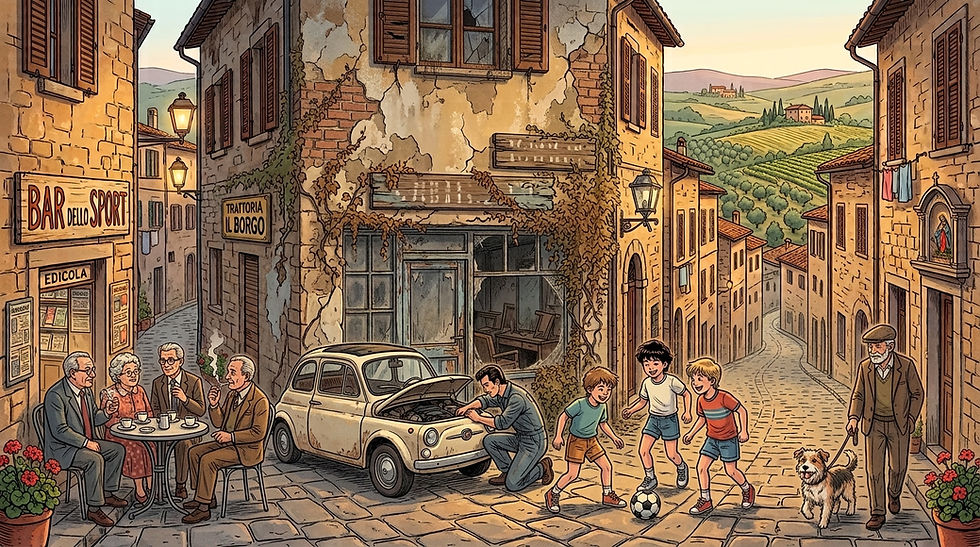

Negli anni Ottanta il mio paese, Campoverde, ha cambiato totalmente pelle. Io c’ero e l’ho visto trasformarsi giorno dopo giorno, mentre la modernità spazzava via le ultime tracce della vecchia vita contadina per far spazio a un benessere nuovo, rumoroso e pieno di colori.
Le stalle e i vecchi fienili in centro venivano abbattuti o ristrutturati per far posto a palazzine nuove di zecca e villette con giardino. Le piazze, che un tempo vedevano passare solo qualche bicicletta, i trattori e gli anziani a passeggio, si sono riempite all'improvviso di auto: le prime Fiat Panda bianche, le Uno, le Ritmo. Tutti volevamo muoverci, uscire, mostrare che anche a Campoverde stavamo bene.
Nelle nostre case l'aria era cambiata del tutto. La televisione a colori si accendeva sulle reti Fininvest, portandoci dentro un mondo patinato fatto di pubblicità, quiz e telefilm americani. La sera ci si trovava in cucina a guardare Drive In o le partite, mentre i primi elettrodomestici "moderni" e il riscaldamento autonomo ci facevano dimenticare il freddo di una volta.
Intanto, la vecchia Italia delle botteghe di quartiere stava sparendo. Proprio sulla strada provinciale, appena fuori dal paese, aprì il primo grande supermercato. Con le sue luci al neon, i carrelli di metallo e le corsie piene di prodotti confezionati, merendine industriali e bevande gassate, capimmo subito che i piccoli commercianti avrebbero fatto una brutta fine. Per fare la spesa adesso serviva l’automobile: era l'inizio di una mutazione silenziosa delle nostre abitudini, il preludio a un nuovo stile di vita consumistico.
Ma per noi ragazzi, Campoverde negli anni '80 voleva dire soprattutto una cosa: libertà e ritrovo. Ci si trovava al muretto o al bar della piazza, dove il rumore del flipper si mescolava a quello dei primi videogiochi arcade. Bastava un Ciao, un Si o un Fifty per sentirsi padroni della strada e spostarsi in gruppo verso la provincia, pronti per le serate nelle grandi discoteche. E quando aprì la prima videoteca, fare la fila il sabato pomeriggio per noleggiare una videocassetta VHS diventò un rito irrinunciabile.
Molti di noi avevano iniziato a studiare fuori o a lavorare nelle fabbriche e nei laboratori nati nella nuova zona artigianale, spesso trasferiti lì dagli stanzoni di casa. La terra si lavorava ancora, certo, ma non era più il destino di tutti. Eppure, sotto questa patina di modernità sfavillante, il paese restava unito: la festa patronale d'estate, la processione e le sagre continuavano a riempire le strade, ricordandoci chi eravamo, anche mentre ci proiettavamo a tutta velocità verso il futuro.
Il cambiamento, del resto, toccava le vite di ciascuno di noi. Ricordo quando i miei cugini, Guido e Barbara, decisero di prendere in mano il proprio futuro. Dopo essersi ripresi dalla morte della zia, cercarono con fatica di accettare la nuova relazione del padre. Un giorno, tornando insieme agli altri fratelli a casa per fargli una sorpresa, lo trovarono a letto con la fidanzata. La nonna, appena saputa la notizia, scagliò tuoni e fulmini. I fratelli più piccoli si stabilirono definitivamente a casa degli zii a cui erano già stati affidati, mentre Guido e Barbara pretesero di rimanere a vivere a Firenze, nella loro casa, per frequentare una famosa scuola di parrucchieri.
Dopo aver lavorato a lungo in un salone rinomato, decisero finalmente di fare il grande salto e aprirne uno tutto loro proprio a Campoverde, conquistando la propria indipendenza. Avevano rilevato un vecchio locale buio sulla strada principale e lo avevano trasformato in una cattedrale della modernità: piastrelle lucide, specchi enormi incorniciati di metallo dorato, poltrone in finta pelle rossa e una batteria di caschi asciugacapelli grigi che sembravano navicelle spaziali pronte al decollo.
Il loro salone divenne presto il cuore pulsante del paese. Entrarvi il venerdì mattina era come varcare la soglia di un mondo parallelo, saturo di luce, chiacchiere e un profumo denso che ti si appiccicava ai vestiti per il resto della giornata: un’essenza inconfondibile di lacca Elnett, ammoniaca e shampoo alle erbe. Su quelle poltrone si consumava il rito d’ingresso nella nuova epoca. La parola d’ordine era una sola: volume. Nessuna donna usciva da lì senza che i suoi capelli avessero sfidato le leggi di gravità. Guido e Barbara manovravano il pettine con la precisione di un chirurgo e la foga di un’artista, cotonando le radici fino a creare impalcature monumentali, scolpite da spruzzate generose di lacca.
Dal lavatesta ci si spostava sotto i caschi. Lì dentro, con il ronzio dell'aria calda nelle orecchie, le donne del paese sfogliavano avidamente le pagine patinate di Novella 2000 e Gioia, sognando i vestiti delle star della TV e scambiandosi le notizie del paese. Sotto quei caschi non esistevano segreti: si sapeva chi stava per vendere il terreno alla nuova zona industriale, chi aveva comprato la casa nuova in periferia e quale ragazza era stata vista al muretto con un giovane del paese vicino.
Anche per noi ragazzi il vento era cambiato. Se i nostri padri continuavano ad andare dal vecchio barbiere Richy, tra il profumo di pino silvestre, il pennello da barba e le discussioni sul campionato, noi volevamo il taglio "unisex". Andavamo al salone di Guido e Barbara per chiedere le sfumature della moda, la frangia spazzolata all'indietro o quel mullet corto sopra e lungo sul collo che vedevamo nei videoclip musicali. Andare dal parrucchiere il fine settimana era diventato un piccolo lusso quotidiano, il simbolo visibile che il benessere era arrivato anche da noi. Ci si faceva belli per la passeggiata del sabato sera lungo il corso, e quando si usciva sulla strada, con i ricci freschi di permanente o la piega impeccabile, si camminava a testa alta. Per me, poi, il negozio dei miei cugini era anche un rifugio ideale per confidarmi.
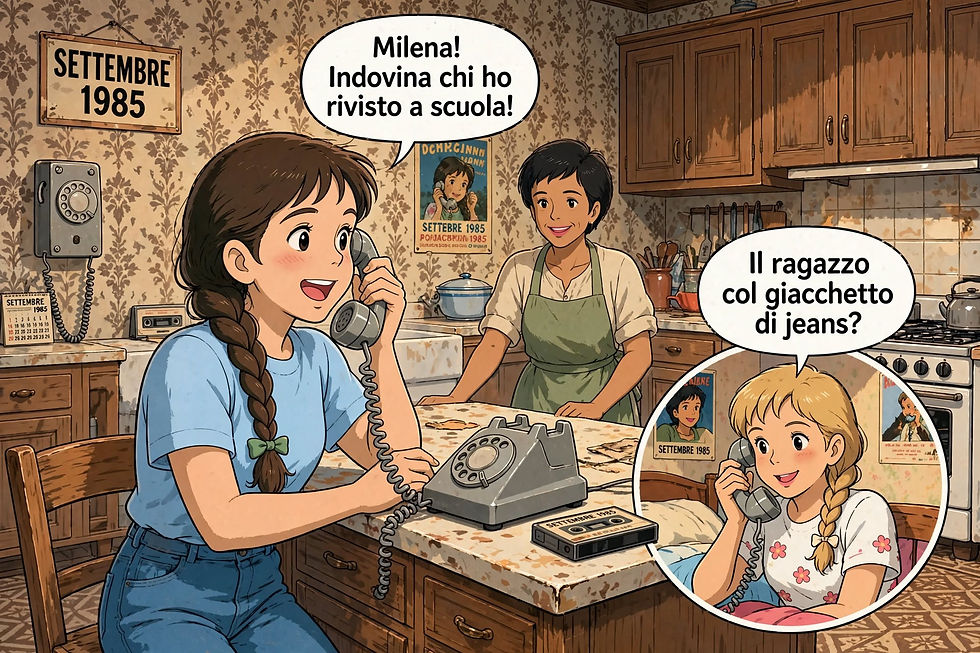
In quel periodo, anche la mia vita privata iniziò a prendere una piega inaspettata. Quando mio fratello venne destinato a Roma dopo il CAR, mi resi conto che sarei rimasta sola a casa per un intero anno. Se da un lato la cosa mi spaventava, dall'altro quella sensazione di libertà somigliava a un'avventura elettrizzante. Io e la mia amica Milena, con la scusa ufficiale dello studio, passavamo ogni pomeriggio insieme senza nessuno tra i piedi. Il tempo non ci bastava mai: non appena ci separavamo per tornare nelle nostre case, distanti solo poche centinaia di metri, ci attaccavamo al telefono Bigrigio della SIP per ore, attorcigliando il lungo cavo elicoidale intorno alle dita fino a farle diventare bianche,
consumando i pomeriggi a parlare di tutto e di niente. NIENTE CELLULARI.

Poi, un giorno, la curiosità prese il sopravvento ed entrai nella mia vecchia camera, il cui ingresso mi era stato vietato per molto tempo. Non la riconoscevo più: un letto a due piazze aveva preso il posto dei lettini e un armadio enorme occupava tutta la parete di fronte. Poster di donne seminude erano attaccati alle pareti, mentre uno stereo con due enormi casse era posizionato di fronte alla finestra, circondato da un mixer e diversi LP sparsi. Era diventata la camera di uno sconosciuto. Sotto il letto c'era ancora un portacenere pieno di cicche spente di nascosto che mia madre non aveva
ancora pulito.
Una strana forma di malinconia mi assalì. Tutto intorno a me stava cambiando e una crepa profonda aveva cominciato a scardinare le mie certezze.
A complicare tutto c'era Edoardo. Ogni volta che lo vedevo, ero costretta a guardarmi dentro e a rimettermi in discussione. Guardandolo non vedevo la luce, ma il mio lato oscuro: un buio profondo che non mi piaceva, che c'era sempre stato ma di cui ora cominciavo ad avere piena consapevolezza. Mentre il mondo intorno correva a tutta velocità verso il futuro, le mie certezze svanivano una dopo l'altra, lasciandomi a mettere in discussione qualsiasi cosa.
Translation:
In the 1980s, my hometown, Campoverde, completely changed its skin. I was there, and I watched it transform day after day, as modernity swept away the last traces of the old peasant life to make room for a new, noisy, and colorful prosperity.
Stables and old barns in the town center were demolished or renovated to make way for brand-new apartment buildings and single-family homes with gardens. The town squares, which once only saw a few bicycles, tractors, and elderly folks out for a stroll, were suddenly filled with cars: the first white Fiat Pandas, Unos, and Ritmos. We all wanted to move around, go out, and show that we too were doing well in Campoverde.
Inside our homes, the atmosphere shifted entirely. Color television turned on to the Fininvest channels, bringing a glossy world of commercials, game shows, and American TV series right into our living rooms. In the evenings, we gathered in the kitchen to watch Drive In or soccer matches, while the first "modern" appliances and central heating made us forget the cold of earlier times.
Meanwhile, the old Italy of neighborhood corner shops was disappearing. Right on the provincial road, just outside town, the first big supermarket opened. With its neon lights, metal shopping carts, and aisles packed with packaged goods, processed snacks, and soft drinks, we realized immediately that small shopkeepers were facing a grim future. Now you needed a car to buy groceries: it was the beginning of a silent transformation in our habits, the prelude to a new consumerist lifestyle.
For us kids, though, the ’80s in Campoverde meant one main thing: freedom and hanging out. We gathered at the low wall or at the square’s main bar, where the clatter of the pinball machine blended with the sounds of the first arcade games. A Ciao, a Si, or a Fifty moped was all it took to feel like owners of the road, riding in groups toward the neighboring towns, ready for nights out at the big provincial nightclubs. And when the first video rental shop opened, queuing up on Saturday afternoon to rent a VHS tape became an unmissable ritual.
Many of us had started studying out of town or working in the factories and workshops springing up in the new industrial area—often relocated from the large spare rooms at home. People still worked the land, of course, but it was no longer everyone’s inevitable fate. Yet beneath this shiny veneer of modernity, the town remained close-knit: the summer patron saint’s festival, the religious procession, and local food fairs kept filling the streets, reminding us of who we were, even as we hurtled toward the future.
This wave of change touched everyone's personal life. I remember when my cousins, Guido and Barbara, decided to take their future into their own hands. After recovering from our aunt's death, they struggled to accept their father's new relationship. One day, returning home with the other siblings to surprise him, they caught him in bed with his girlfriend. Upon hearing the news, grandmother threw a fit. The younger siblings settled permanently with the aunt and uncle who had already been caring for them, while Guido and Barbara insisted on staying in Florence, in their own home, to attend a famous hairdressing school.
After working for a long time at a renowned salon, they finally decided to make the leap and open one of their own right in Campoverde, claiming their independence. They took over an old, dim commercial space on the main street and transformed it into a cathedral of modernity: glossy tiles, huge mirrors framed in golden metal, red faux-leather chairs, and a battery of gray hood hair dryers that looked like space pods ready for takeoff.
Their salon quickly became the beating heart of the town. Stepping in on a Friday morning felt like crossing into a parallel world, saturated with light, chatter, and a thick scent that stuck to your clothes for the rest of the day: an unmistakable blend of Elnett hairspray, ammonia, and herbal shampoo. In those chairs, the initiation ritual into the new era took place. The golden rule was simple: volume. No woman left without hair that defied the laws of gravity. Guido and Barbara handled their combs with the precision of a surgeon and the passion of an artist, teasing roots into monumental structures, sculpted by generous spritzes of hairspray.
From the washbasin, where warm water and suds washed away the week's worries, clients moved under the hair dryers. There, with the hum of warm air in their ears, the women of the town eagerly flipped through the glossy pages of gossip magazines like Novella 2000 and Gioia, dreaming of TV stars' outfits and exchanging local gossip. Under those hoods, there were no secrets: everyone knew who was about to sell land to the new industrial zone, who had bought a new house on the outskirts, and which local girl had been spotted at the wall with a boy from the next town over.
For us young people, the wind had shifted too. While our fathers kept going to old Richy the barber—amid scents of Pine Silvestre, shaving brushes, and soccer talk—we wanted "unisex" cuts. We went to Guido and Barbara's salon to ask for the latest styles, swept-back bangs, or the mullet—short on top and long in the back—that we saw in music videos. Getting your hair done on the weekend was no longer just about hygiene or neatness; it had become a small daily luxury, a visible symbol that prosperity had reached us too. We dressed up for the Saturday night promenade along the main street, and walking out with fresh perm curls or a sleek blow-dry, we held our heads high. For me, my cousins' shop was also the perfect sanctuary for confiding my secrets.
Around that time, my private life began taking an unexpected turn. When my brother was assigned to Rome after basic military training, I realized I would be home alone for a whole year. While the thought frightened me, that feeling of freedom also felt like a thrilling adventure. My friend Milena and I, using studying as our official excuse, spent every afternoon together without anyone bothering us. Time was never enough: the moment we parted to go back to our homes, just a few hundred yards apart, we glued ourselves to the landline telephone for hours. We coiled the long spiral cord around our fingers until they turned white, spending entire afternoons talking about everything and nothing. NO MOBILE PHONE.
Then, one day, curiosity got the better of me, and I walked into my old bedroom—the one I had been forbidden from entering for a long time. I couldn't recognize it anymore: a double bed had replaced the twin beds, and a massive wardrobe took up the entire opposite wall. Posters of scantily clad women were pinned to the walls, while a stereo with two giant speakers sat in front of the window, surrounded by a mixer and several vinyl LPs scattered around. It had become a stranger's room. Under the bed, an ashtray full of secretly smoked cigarette butts was still waiting to be cleaned by my mother.
A strange kind of melancholy washed over me. Everything around me was changing, and a deep crack had begun to shatter my certainty.
To make matters worse, there was Edoardo. Every time I saw him, I was forced to look inward and question myself. Looking at him, I didn't see the light, but my own dark side: a deep shadow I didn't like, one that had always been there, but that I was now becoming fully aware of. While the world around me raced at full speed toward the future, my certainties vanished one by one, leaving me questioning everything.


Commenti